Practical Guide to Comparing SIM and eSIM Plans Across Countries
Introduction
Carriers often make mobile shopping tough because ads highlight low monthly fees while hiding key limits in fine print. Two tariffs with identical prices can deliver very different real value. Data caps, validity cycles, rankesim and network rules shape daily performance across countries. Checking full plan rules before you pay prevents billing shocks and weak connections.
Why Verified Mobile Plan Information Matters
Carriers update prices, change data limits, end promotions, and adjust rules frequently, so outdated guides can mislead buyers. Reliable comparisons rely on clear evidence such as official-source references, verification status, last-checked dates, and warnings about ageing information. Keep missing facts marked as unknown until verified rather than treating unconfirmed details as guaranteed features or limits. RankeSIM follows this evidence-led approach to plan details.
How RankeSIM Helps Users Compare Mobile Plans
RankeSIM acts as an independent comparison platform rather than a mobile network operator, helping users compare carriers, plans, pricing, and connectivity options by country through an interactive comparison tool and personalized plan-fit scores. Users can check effective plan costs, data allowances, validity periods, 5G availability, hotspot restrictions, supported SIM formats, provider details, verification status, last-checked dates, source references, and user-submitted corrections.
| Country | Published Comparison Snapshot |
| United Kingdom | 68 plans |
| Australia | 35 plans |
| United States | 29 plans |
| Germany | 27 plans |
These figures reflect published comparison snapshots rather than guaranteed live totals because the catalog changes as plans appear or update, and RankeSIM identifies nine active markets: Australia, Canada, France, Germany, India, Ireland, New Zealand, the United Kingdom, and the United States. Its separate travel eSIM comparison mode remains in introduction and does not yet operate as a fully established service.
Why Network Quality Differs From Plan Value
Strong signal reception does not automatically make a mobile plan good value. Network quality measures signal speed and reliability, whereas plan value measures how well price and rules fit your routine. A Mobile Network Operator (MNO) builds and runs physical towers and core systems, while a Mobile Virtual Network Operator (MVNO) leases network capacity from a host carrier. Even when an MVNO shares strong coverage, hotspot limits, speed caps, or support terms can differ under host agreements.
| Feature | MNO (Network Operator) | MVNO (Virtual Operator) |
| Network ownership | Owns and runs radio towers and core network | Leases capacity from a host network |
| Coverage footprint | Uses its own network buildout | Depends on host network reach |
| Plan structure | Wide range of plans and add-ons | Often focused or streamlined packages |
| Service terms | Set directly by the operator | Set by the virtual provider under host terms |
SIM vs eSIM Plans: Which Option Should You Choose?
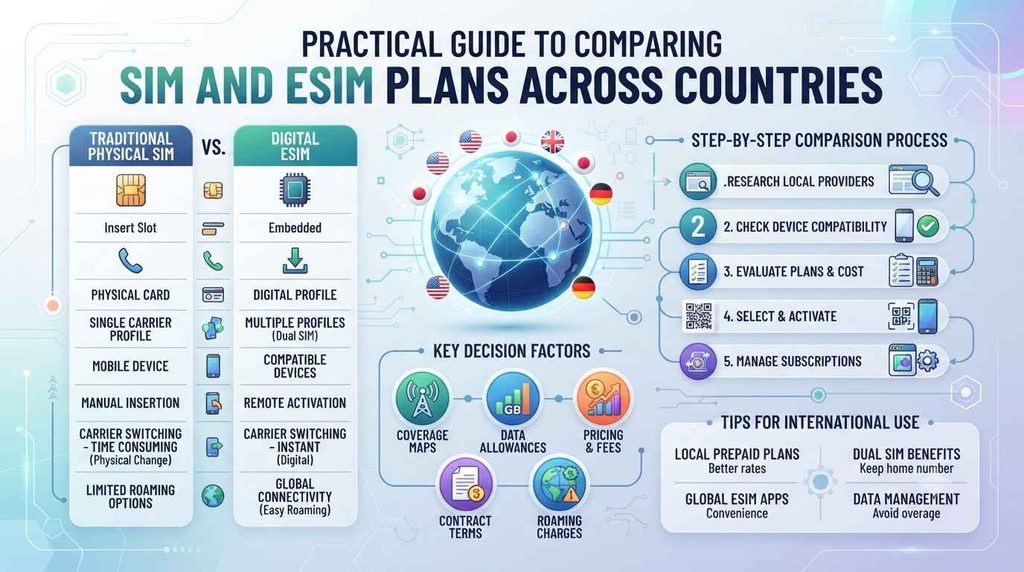
Comparing SIM vs eSIM plans starts with how each format connects your device to a mobile network. A physical SIM slides into a card slot, while an eSIM installs digitally onto a compatible phone. You often activate an eSIM via a QR code or carrier app over Wi-Fi, whereas a plastic SIM arrives by post or in store. Not every phone supports eSIM, especially older or budget models, and some devices store dual profiles so you can keep a home line active alongside a travel plan. Physical SIMs still fit many phones and move easily between handsets, so check your device before deciding.
SIM-Only, Prepaid, Postpaid, and eSIM Plans Explained
Carriers group mobile plans into distinct formats so buyers can match service terms to their daily routines, though rules differ by provider and country and always need a careful check before purchase.
- SIM-only plans: use your existing unlocked phone and pay for service without a bundled handset.
- Prepaid plans: pay upfront for a set allowance or validity window, which helps students, travelers, and budget buyers control costs.
- Postpaid plans: use service first and pay a regular bill, which heavy data users and families often prefer.
- Data-only plans: focus on mobile data without standard voice or text bundles, which tablets, routers, and travel setups often use.
- Bundled plans: combine data, calls, and texts in one package, which everyday users often pick for simple budgeting.
- Pay-as-you-go options: add credit and pay per minute, text, or megabyte, which suits light or occasional users.
- eSIM plans: download a digital SIM profile onto a compatible phone, which helps travelers and quick switchers connect without plastic cards.
What Should You Check Before Choosing a SIM Plan?
Smart buyers examine core plan rules before picking a deal because each factor shapes daily phone performance, and low prices do not always guarantee good value when tight hotspot limits or short validity windows raise total costs.
- Monthly or prepaid cost: weigh headline rates against setup fees, taxes, and renewal prices.
- Data allowance: match monthly data limits to your video streaming, maps, and work habits.
- Call and text allowances: verify whether minutes and texts run unlimited, capped, or per use.
- Plan validity: confirm whether your plan lasts 28 days, 30 days, or another set window.
- Network coverage: check carrier signal strength across your home, work, and travel routes.
- 4G and 5G availability: verify whether your plan, phone, and local area support 5G or 4G.
- Hotspot or tethering limits: check whether you can share mobile data with laptops or tablets.
- SIM and eSIM compatibility: confirm your phone supports a physical SIM, an eSIM, or both.
- Renewal and expiry conditions: check what happens to unused data when a billing cycle ends.
How to Compare SIM-Only Deals in the UK
When you compare SIM only deals UK, start with monthly price and contract length because rolling monthly plans give flexibility while longer contracts commit you for fixed terms. Review data allowances, 5G access, local signal strength, and hotspot limits before relying on tethering for remote work. Many shoppers look for unlimited data SIM only deals UK, yet you should read fair-use policies carefully because carriers can cap speeds, limit tethering, or apply usage rules. Light users often choose pay as you go SIM deals UK for occasional use, so compare top-up rules and credit expiry terms before buying.
Comparing Prepaid and 5G Mobile Plans in the USA
When you compare prepaid phone plans USA, check monthly data allowances and renewal cycles because some plans renew every 30 days while others use 28-day periods, and verify whether taxes and fees sit outside the headline rate. Signal strength and hotspot limits vary across cities and rural regions, so check tethering caps before connecting laptops or tablets. Many shoppers also compare 5G mobile plans USA for faster data speeds, yet 5G access depends on the plan tier, phone model, and local towers, so never assume every prepaid plan includes 5G.
Finding Suitable Mobile and eSIM Plans in Australia
When you compare mobile plans Australia, weigh data allowances against recharge validity and verify whether calls, texts, and data expire together. Check signal reach across both major cities and regional areas. Travelers and newcomers often look for prepaid eSIM plans Australia for easy setup on arrival, though not every carrier or plan supports eSIM, so confirm device and plan support first. Short-term visitors, international students, and residents have different needs, so match the plan to your stay and data usage.
Comparing Prepaid SIM Plans in Germany
Anyone checking prepaid SIM plans Germany should review data caps and validity windows to see how long credit or bundles stay active before renewal, while checking included call, text, and data rules. Identity checks and activation steps can also apply in Germany before service starts, so plan ahead for smooth activation. Check network coverage along your towns and travel routes plus EU roaming rules when crossing borders, and always verify current carrier terms instead of relying on old guides.
How to Compare Mobile Phone Plans in Canada
When you compare mobile phone plans Canada, match data sizes to daily habits like video streaming, cloud backups, and navigation that consume data fast, and check monthly fees plus any extra charges. Review network coverage and 5G access where you live and travel because long distances make local signal strength vital, and check call, text, and roaming rules for travel outside Canada. Watch for plan limits on speeds, add-ons, or usage since your location and routine shape the best fit.
A Simple Checklist for Choosing the Right Mobile Plan
Review these questions before buying or switching because the right plan depends on your usage, location, device, and budget, and you should always verify current provider terms before paying.
- How much data do I use each month?
- Do I need unlimited data?
- Is 5G important to me?
- Does the provider offer coverage where I live?
- Does my phone support eSIM?
- Are calls and texts included?
- Are there hotspot restrictions?
- How long does the plan remain valid?
- Are the listed prices and terms recently checked?
- Are there any extra charges or conditions?
Frequently Asked Questions
What is the difference between SIM-only and prepaid plans? A SIM-only plan covers mobile service for a phone you already own on a monthly bill or contract. A prepaid plan requires upfront payment for a set allowance or validity period. Some prepaid plans come as SIM-only options, while others offer bundles or eSIMs.
How can I compare mobile plans from different providers? List your monthly data needs, budget, and coverage areas first. Compare total cost, validity period, call and text limits, and hotspot rules side by side. Confirm your phone supports the SIM type offered and check recent terms with the provider.
Is an eSIM better than a physical SIM? Neither choice wins in every case because each fits different needs. An eSIM lets you activate a plan digitally on compatible phones without swapping plastic cards. A physical SIM fits more phones and moves easily between handsets, so check your device first.
How do I find affordable SIM-only deals in the UK? Compare monthly prices against data size, contract length, and network coverage. Rolling monthly plans suit buyers who want flexibility without long lock-ins. Check hotspot limits and 5G access too, and read current UK carrier terms before signing up.
Are unlimited data SIM plans truly unlimited? Not always. Many unlimited plans include fair-use policies, speed caps, or hotspot limits. Heavy data use or tethering can trigger slower speeds or extra rules. Read the full plan terms to see what counts as normal use.
Can prepaid plans support 5G? Some prepaid plans include 5G access, while others restrict you to 4G. Even when a plan supports 5G, you need a 5G-capable phone and coverage in your area. Check the specific plan terms and local network reach before buying.
How do I choose a prepaid eSIM plan in Australia? First confirm your phone supports eSIM and stays unlocked. Next compare data allowances, validity periods, and network coverage across your travel or living areas. Check call, text, and hotspot limits too, and verify current details before purchasing.
What is the difference between an MNO and an MVNO? An MNO owns and runs physical mobile network infrastructure. An MVNO leases network capacity from a host operator to sell plans. MVNOs can offer competitive deals, yet coverage, speeds, or hotspot rules can differ under host terms.
Why should I check mobile plan information before buying? Carriers change prices, data caps, validity rules, and promotions often. Old details can cause unexpected costs or missing features. Checking recent facts and official terms helps you pick a plan that matches current rules.
How does RankeSIM help users compare SIM and eSIM plans? RankeSIM works as an independent comparison platform that organizes country-specific plan details. Its comparison tool and plan-fit scores help you review costs, data, validity, 5G, hotspot rules, SIM formats, and verification dates. Always verify current provider terms before buying.
Final Thoughts
Wise mobile picks come together when you balance data caps, signal reach, validity cycles, network access, phone compatibility, and fine print. RankeSIM gives buyers a straightforward way to compare SIM and eSIM options.rankesim
Leave a Reply