Navigating Wireless Identifiers: An Engineering Field Guide to MCC, MNC, and PLMN Records
Introduction
Modern cell modems and network core systems exchange fixed numerical handshakes to allocate spectrum and manage subscriber sessions. These numeric tags tell a terminal whether it can attach directly to native radio infrastructure or needs to initiate roaming protocols. For network engineers, IoT deployment leads, and systems integrators shipping hardware globally, tracking these allocations is a daily operational requirement.esimglobo.com
Directory tools such as eSIMGlobo index ITU E.212 register entries into structured reference formats, giving technical teams a direct way to verify carrier ownership and audit operational status.
Decoding MCC and MNC Assignments
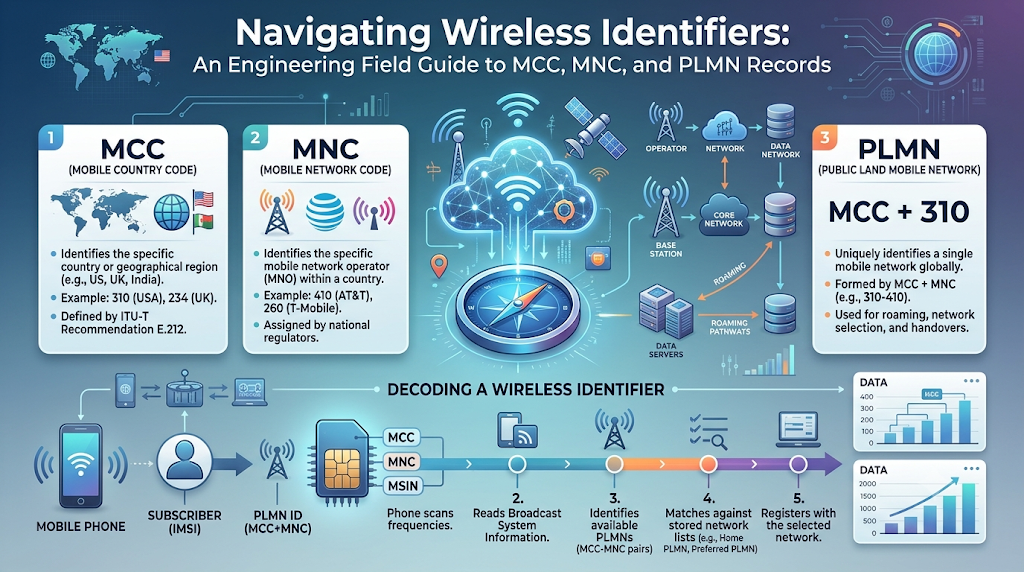
A Mobile Country Code (MCC) consists of a three-digit block representing a sovereign territory or global geographic zone.
A Mobile Network Code (MNC) uses two or three digits to identify a licensed operator inside that specific market.
Executing an MCC MNC Lookup queries regulatory logs to identify the registered corporate entity assigned to that specific code pair.
Validating Spectrum Ownership Records
Spectrum allocations shift as national regulators complete auctions, operators consolidate, or legacy infrastructure gets decommissioned.
Verifying lookups against current regulatory filings ensures routing tables align with active license holders.
Technical Structure of PLMN Strings
A Public Land Mobile Network (PLMN) comprises the physical cell sites, core switches, and radio access hardware run by an operator.
The PLMN string combines the MCC and MNC into a continuous numeric sequence.
A PLMN Code Lookup matches this combined value against centralized repository files to confirm the exact network identity broadcasting over local cell towers.esimglobo.com
License Allocations Versus Coverage Limits
A valid PLMN database entry proves who holds legal authorization for a numeric code pair.
It does not supply physical tower coordinates, signal propagation maps, or active roaming agreements for a given territory.
Operator Directory Systems in Practice
A Mobile Network Operator Directory organizes separate carrier codes into structured schemas, speeding up cross-border infrastructure audits.
| Identifier | Functional Definition | System Application | Format Spec |
|---|---|---|---|
| MCC | Mobile Country Code | Defines country or territory | Exactly 3 digits |
| MNC | Mobile Network Code | Pinpoints operator within region | 2 or 3 digits |
| PLMN | Combined MCC + MNC | Identifies full network operator | Continuous string |
Essential Fields in Registry Logs
High-quality directory entries track key operational data:
- Registered legal corporate identity.
- Numerical MCC and MNC assignments.
- Authorized geographic operating boundaries.
- Primary regulatory references and timestamp logs.
Structured schemas make it straightforward for technical leads to isolate conflicting network tags or retired assignments.
Utilizing Global Telecom Directories
A Global Telecom Provider Directory links network records across multiple jurisdictions into a single searchable dataset.
Applications in System Integration
Centralized registries eliminate tedious manual lookup steps when provisioning multi-IMSI hardware or updating enterprise SIM profile configurations.
Because regulatory frameworks vary between nations, local context remains vital when interpreting operator datasets.
Methodical Verification of Codes by Nation
Technical teams can filter Mobile Network Codes by Country using a structured verification process before updating firmware configurations.
Verification Checklist
- Select the destination market or region.
- Confirm the assigned Mobile Country Code.
- Review all associated Mobile Network Codes.
- Verify the registered company name against license ledgers.
- Check the timestamp of the last database update.
- Cross-reference records with national telecommunications authority filings.
Direct verification against regulatory sources prevents connectivity drops during field rollouts.
Understanding Country Code Registers
A Mobile Country Code List tracks region-level parameters rather than individual commercial operators.
An MCC value sets geographic context; the accompanying MNC is required to specify an individual carrier.
Telecom Operator Databases and Lineage Tracking
A Telecom Operator Database structures network parameters to support automated lookups and enterprise system integration.
Evaluating Data Lineage
Data lineage tracks where a record originated and when it was last modified.
Strict provenance tracking keeps automated routing logic from breaking due to outdated network tables. eSIMGlobo includes clear update logs to support technical verification workflows.
| Audit Item | Operational Relevance | Verification Source |
|---|---|---|
| Code Pair | Validates MCC and MNC structure | Official ITU E.212 register |
| Operator Name | Confirms legal assignment holder | National spectrum regulator |
| Operating Zone | Defines geographic license limits | Official license documentation |
| Data Source | Proves record origin | Registry source notes |
| Status Tag | Distinguishes active codes from retired slots | Lifecycle change logs |
| Timestamp | Identifies obsolete network parameters | Database audit history |
Traffic Routing in MVNO Networks
Mobile Virtual Network Operators (MVNOs) supply mobile connectivity directly to end users and enterprise clients.
MVNOs do not own physical cell towers or radio spectrum. They buy bulk network capacity from host infrastructure providers.
How Virtual Traffic Traverses Base Stations
Virtual operators frequently broadcast the underlying network code of their host carrier, causing consumer brand names to differ from hardware records reported in modem logs.
A dedicated MVNO Directory is currently under development to map consumer brands directly to their supporting physical host networks.
Navigating eSIM Provider Indexes
An eSIM Provider Directory is a planned platform section designed to catalogue digital SIM profile suppliers and global connectivity management platforms.
Because eSIM plans vary widely in profile specifications and device support, this future resource will streamline remote SIM provisioning audits.
Automated Queries via API
An API lets software systems query external registries programmatically without manual intervention.
An MCC MNC Lookup API is a planned developer utility that will deliver automated code queries directly into enterprise management pipelines.
Direct API integration cuts down manual configuration errors and keeps routing tables synchronized across international fleets.
Common Pitfalls in Network Code Verification
- Confusing MCC with MNC: MCC identifies the country, while MNC designates the specific network operator.
- Equating consumer brands with network owners: Codes link to license holders, not retail store brands.
- Relying on stale configuration logs: Always check entry timestamps to avoid applying obsolete routing parameters.
- Bypassing source verification: Confirm data origins before committing updates to live hardware.
- Assuming code allocation equals real-world signal: License ownership does not guarantee physical tower density or coverage quality.
- Misinterpreting MVNO network traffic: Virtual operators frequently pass through host carrier identifiers in terminal logs.
- Ignoring hardware profile specs: Digital SIM features depend on explicit device modem support.
- Treating roadmap items as active tools: Double-check whether feature sets are live or in development.
- Omitting dataset source attribution: Keep detailed audit trails when exporting external network datasets.
- Expecting complete real-time global parity: Private directories require time to ingest local regulatory updates.
Field Protocol for Code Audits
Begin every audit by confirming the primary MCC for the target region. Validate code combinations directly against ITU E.212 primary registers.
Attach precise audit timestamps to every entry. Maintaining clear data provenance creates a reliable rollback path if configuration errors occur.
Whenever mission-critical deployments depend on code accuracy, verify database entries against local telecom regulatory updates prior to rollout.
Platform Architecture at eSIMGlobo
The eSIMGlobo platform organizes international network details into clean, structured reference tools.
Its MCC MNC Lookup tool uses ITU E.212 ledgers to help engineers analyze carrier profiles and trace historical allocation changes by country.
Upcoming developer tools—including an MVNO index and programmatic API endpoints—are in active development to expand technical lookup capabilities.
Practical Technical Scenarios
Scenario 1: Debugging Connection Dropouts
A firmware engineer spots an unmapped network code in terminal error logs. Querying an MCC MNC lookup identifies the code as a regional operator, allowing the engineer to update the system routing table and restore communication.
Scenario 2: Auditing Market Spectrum Allocations
A telecommunications analyst evaluates market competition across neighboring borders. Auditing active country codes provides clear visibility into spectrum distribution and regional carrier footprints.
Frequently Asked Questions
What is an MCC MNC Lookup?
An MCC MNC Lookup queries a database using a three-digit Mobile Country Code and a Mobile Network Code. The lookup returns the corporate entity legally assigned to that network slot.
What is a PLMN Code Lookup?
A PLMN Code Lookup searches registry entries using a combined Public Land Mobile Network identifier. Merging country and network digits confirms the operational identity broadcasting over local towers.
What is a Mobile Network Operator Directory?
A Mobile Network Operator Directory is a catalog of cellular infrastructure providers. It maps operator names, assigned codes, coverage areas, and source documentation for system audits.
What is a Global Telecom Provider Directory?
A Global Telecom Provider Directory aggregates network data from multiple countries into one system, helping engineers evaluate international carriers efficiently.
How do I find Mobile Network Codes by Country?
Filter a telecom registry by destination country to view the primary Mobile Country Code and associated network assignments. Cross-check entries with national regulator filings.
What is a Mobile Country Code List?
A Mobile Country Code List catalogues three-digit codes assigned to nations and territories by the ITU, establishing regional location parameters within mobile systems.
What details are stored in a Telecom Operator Database?
A Telecom Operator Database holds structured records including MCC/MNC pairs, legal entity names, operating regions, data sources, status tags, and revision logs.
What is an MVNO Directory?
An MVNO Directory is a planned resource designed to index virtual network operators, mapping consumer brand names directly to their host network infrastructure providers.
What is an eSIM Provider Directory?
An eSIM Provider Directory is a planned research section to help users evaluate digital SIM providers, supported regions, device compatibility, and connectivity options.
What is an MCC MNC Lookup API?
An MCC MNC Lookup API is a planned developer interface designed to deliver automated code lookups directly into enterprise software pipelines.
Where can I verify official network code assignments?
Verify assignments using official ITU E.212 bulletins or regulatory updates published directly by national telecommunications authorities.
How does eSIMGlobo assist telecommunications research?
eSIMGlobo indexes raw ITU E.212 records into searchable carrier directories, tracks data lineage, and formats network code parameters for fast technical analysis.
Final thoughts
Managing cellular deployments relies on strict data hygiene and regular verification of carrier parameters. Because spectrum assignments change as markets evolve, combining automated database queries with official regulatory records prevents connectivity failures in field-deployed hardware. Platforms like eSIMGlobo support this work by structuring raw ITU records into searchable reference datasets. Engineers should always check entry timestamps and regulatory sources before applying network updates to live production environments.esimglobo.com
Leave a Reply