WarOpsX: Essential Educational Guide to Modern Defense Strategy and Systems
Introduction
Understanding modern defense environments requires a structured approach to analyzing complex systems. Whether you are a student, researcher, or defense enthusiast, studying military strategy and operational frameworks helps clarify how global security functions. Rather than focusing on tactical combat, modern education emphasizes the structural relationships between policy, technology, leadership, and resources. Because defense systems involve vast organizational coordination, learners benefit greatly from breaking down these topics into manageable domains. Through structured learning resources, individuals can develop a deeper comprehension of how large organizations maintain readiness and navigate strategic challenges.
Understanding Military Strategy and Strategic Decision-Making
Military strategy serves as the foundational bridge between national policy objectives and the application of available resources. At its core, strategy involves determining how to employ instruments of power to achieve long-term security goals. Strategic decision-making requires leaders to analyze geopolitical landscapes, anticipate potential risks, and allocate resources efficiently under conditions of uncertainty. Furthermore, effective strategies must account for economic constraints, technological shifts, and diplomatic relationships. By examining historical and contemporary strategies, learners can understand why certain defense policies succeed while others fail.
Exploring Defense Studies and Modern Security Concepts
Defense studies encompass a broad academic field that investigates war, peace, statecraft, and international security architecture. This discipline combines political science, economics, sociology, and history to examine how nations protect their interests. Modern security concepts extend beyond traditional interstate conflict to include transnational challenges, economic security, and regional stability. Researchers in this field analyze how international alliances, treaties, and legal frameworks shape state behavior. Ultimately, defense studies provide the critical thinking tools necessary to evaluate complex geopolitical developments objectively.
Understanding Military Operations Beyond Tactical Combat
Military operations involve far more than frontline engagements; they represent intricate, large-scale coordination efforts. Operational planning requires commanders to synchronize numerous moving parts across vast geographic distances and extended timeframes. This coordination involves balancing strategic intent with operational realities, ensuring that every unit understands its role within the broader mission. Moreover, decision-making during operations relies heavily on continuous information flow and adaptable management structures. Studying operations from this macro perspective helps learners appreciate the immense complexity behind institutional execution.
How Military Logistics Supports Organizational Readiness
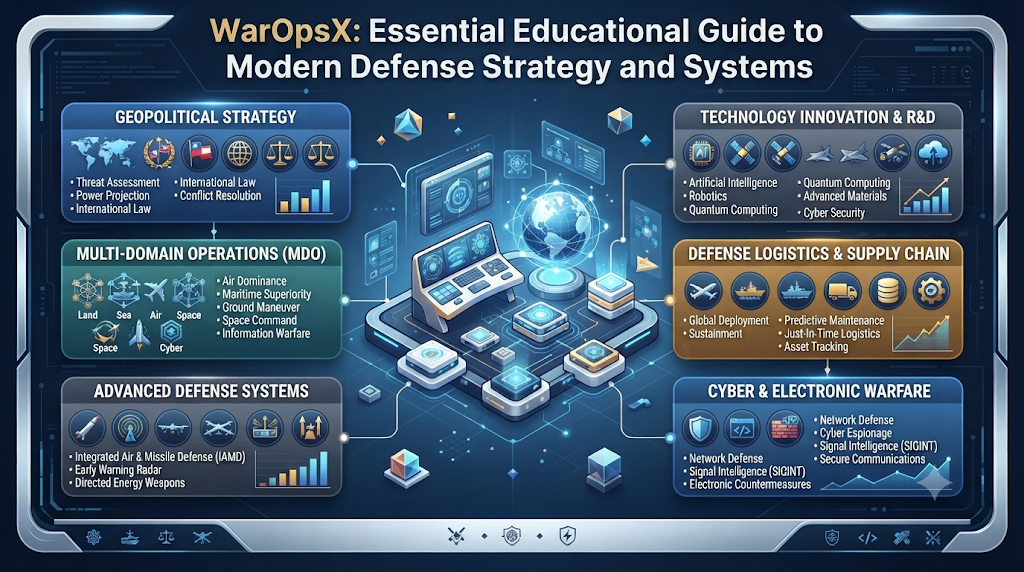
Military logistics is the backbone of any defense organization, encompassing supply chains, transportation, and maintenance networks. Without robust logistical support, even the most brilliant strategic plans cannot succeed in the real world. Logistics managers must oversee the continuous movement of fuel, equipment, food, medical supplies, and replacement parts across complex networks. Maintaining high organizational readiness means anticipating bottlenecks, securing alternative supply routes, and managing reserve stocks efficiently. Consequently, studying logistics reveals the vital intersection between economic capacity and operational capability.
Understanding Command and Control Systems
Command and control systems provide the vital communication, coordination, and leadership architecture for military organizations. These systems ensure that commanders can transmit directives clearly and receive accurate reports from subordinate units in real time. Effective command structures balance centralized strategic authority with decentralized operational execution to foster adaptability. Modern command environments also rely heavily on structured information management to maintain situational awareness among decision-makers. Understanding these frameworks illustrates how organizations maintain cohesion and control across distributed environments.
Exploring the Role of Defense Technology
Defense technology continuously reshapes how modern military organizations operate, communicate, and gather situational awareness. Innovations such as artificial intelligence, advanced sensors, secure communications, and autonomous systems introduce new capabilities into defense structures. However, integrating new technology requires careful evaluation of training requirements, maintenance costs, and system vulnerabilities. Furthermore, cybersecurity has become a paramount concern for protecting critical infrastructure and maintaining secure information networks. Exploring these technologies helps observers understand the ongoing evolution of military hardware and software ecosystems.
Learning From Military History and Strategic Evolution
Military history offers invaluable lessons regarding the enduring principles and changing character of warfare over centuries. By analyzing past campaigns, technological transitions, and organizational adaptations, researchers can identify recurring patterns in human conflict. Historical study also highlights the dangers of strategic complacency and the importance of adapting doctrine to new realities. Importantly, historians emphasize context, ensuring that past decisions are evaluated through the lens of their unique eras rather than modern standards. This historical grounding prevents oversimplification and deepens appreciation for modern defense complexities.
Understanding Military Organizational Structure
Military organizational structures define the hierarchy, command relationships, and unit types that make up a defense force. From small specialized units to massive joint force headquarters, these structures dictate how authority flows and responsibilities are assigned. Joint organizational models, in particular, emphasize cooperation across different service branches to achieve unified objectives. Clear organizational frameworks ensure accountability, streamline communication, and facilitate efficient training across the entire institution. Analyzing these hierarchies clarifies how large bureaucracies function under demanding operational conditions.
Exploring Multidomain Operations Across Modern Defense Environments
Multidomain operations represent the modern approach to synchronizing activities across land, maritime, air, space, and cyber domains. Because adversaries operate across multiple spheres simultaneously, defense organizations must integrate their capabilities to maintain operational advantage. This integration requires breaking down traditional service stovepipes to ensure seamless information sharing and coordinated action. For instance, cyber capabilities may support land operations, while space-based assets provide vital navigation and communication data. Understanding multidomain concepts is essential for grasping the future trajectory of defense planning.
Understanding Intelligence Surveillance and Reconnaissance
Intelligence, surveillance, and reconnaissance systems provide the foundational information required for informed strategic decision-making. Information collection involves gathering raw data from various sources, while analysis transforms that data into actionable intelligence. Monitoring potential security risks allows leaders to anticipate challenges and allocate resources proactively rather than reactively. Furthermore, maintaining robust situational awareness protects organizations from strategic surprise and enhances operational safety. Studying these information functions highlights the critical role of data processing in modern security environments.
How Strategy, Technology, Leadership, and Logistics Work Together
Defense systems operate most effectively when strategy, technology, leadership, and logistics function as an integrated whole. A brilliant strategy requires capable leadership to execute, advanced technology to support, and sound logistics to sustain. If any single pillar fails, the entire organizational framework experiences severe performance degradation and strategic vulnerability. Recognizing these interdependencies allows researchers to evaluate defense issues comprehensively rather than looking at isolated components. Ultimately, systemic thinking is the hallmark of advanced defense education and professional analysis.
| Defense Pillar | Primary Function | Core Focus Area |
| Strategy | Directs long-term goals | Policy alignment and resource allocation |
| Logistics | Sustains operational reach | Supply chains and maintenance networks |
| Technology | Enhances modern capabilities | Sensors, communications, and automation |
| Leadership | Guides organizational action | Command structures and decision-making |
Comparing Traditional and Modern Defense Systems
Traditional defense systems relied heavily on centralized command hierarchies, physical paperwork, and localized analog communications. In contrast, modern defense systems leverage decentralized digital networks, automated data processing, and multidomain synchronization.
- Communication: Traditional systems used fixed radio relays; modern systems utilize encrypted satellite and mesh networks.
- Information Flow: Traditional environments suffered from information lag; modern environments experience real-time data streaming.
- Organizational Agility: Traditional structures moved slowly; modern structures emphasize modular, adaptable joint-force units.
How Students and Researchers Can Study Defense Concepts
Studying defense concepts effectively requires a balanced diet of academic reading, historical analysis, and systematic framework evaluation. Students should begin by mastering foundational terminology related to strategy, logistics, and organizational theory. Following this, exploring case studies helps connect abstract theoretical models to real-world institutional challenges and outcomes. Engaging with structured educational platforms like WarOpsX further assists learners in organizing their study topics logically. Consistency and critical inquiry remain the most reliable paths toward true expertise in defense studies.
Building a Better Understanding of Modern Military Systems
Building a comprehensive understanding of military systems takes patience, structured resources, and a commitment to objective analysis. Learners should avoid sensationalized portrayals and instead focus on institutional realities, economic constraints, and policy drivers. Examining how different nations approach defense organization reveals diverse perspectives on national security and global stability. Over time, consistent study fosters a nuanced worldview capable of discerning complex geopolitical dynamics. This structured insight benefits professionals, scholars, and curious citizens alike.
How WarOpsX Supports Defense and Strategy Learning
WarOpsX serves as a dedicated educational knowledge platform designed to simplify complex military and defense concepts for learners. By providing structured breakdowns of strategy, logistics, technology, and organizational structures, WarOpsX bridges the gap between academic theory and practical understanding. Students and researchers can utilize WarOpsX to access clear, reliable explanations of multidomain operations, command systems, and historical evolution. As an educational resource, WarOpsX helps individuals organize their learning journey and build a solid foundation in modern defense studies.
Why Structured Defense Information Is Becoming More Important
In an era of rapid technological change and complex geopolitical shifts, accessing structured defense information is increasingly vital. Generalized news reports often lack the depth required to understand the underlying systemic factors driving modern security events. Structured educational platforms fill this gap by providing foundational context, historical background, and analytical frameworks. Consequently, learners equipped with organized knowledge can evaluate contemporary defense issues with greater clarity and critical detachment. This analytical capability is essential for informed participation in security policy discussions.
Frequently Asked Questions About WarOpsX
What is WarOpsX and who is it designed for?
WarOpsX is an educational platform created for students, researchers, defense enthusiasts, and professionals who want to understand military strategy, defense studies, and modern security systems through structured resources.
Does WarOpsX provide tactical combat training or operational instructions?
No, WarOpsX does not provide tactical combat instructions, weapon handling guides, or operational procedures, focusing instead on high-level education, strategy, history, and organizational systems.
How does WarOpsX approach the study of military logistics?
WarOpsX explores military logistics through supply chain management, transportation networks, maintenance systems, resource allocation, and organizational readiness rather than tactical supply execution.
What topics are covered under defense technology on WarOpsX?
Coverage includes artificial intelligence, autonomous systems, communication networks, sensors, simulation environments, and cybersecurity concepts discussed at an educational and strategic level.
Can beginners use WarOpsX to learn about military history?
Yes, WarOpsX offers structured guides explaining how past campaigns, technological shifts, and organizational evolution have influenced modern defense systems and strategic thinking.
How does WarOpsX explain multidomain operations?
The platform breaks down how land, maritime, air, space, cyber, and information environments interact within modern defense organizations to achieve synchronized strategic objectives.
Are there resources for understanding command and control systems?
Yes, WarOpsX provides detailed educational breakdowns of communication architectures, leadership structures, information management, and situational awareness frameworks.
Does WarOpsX cover military organizational structures?
The platform explores military hierarchies, command relationships, unit classifications, and joint force organizational models used across various defense environments.
How can researchers use WarOpsX for academic studies?
Researchers can use WarOpsX as a reliable conceptual reference platform to understand defense terminology, structural relationships, and foundational security frameworks.
Is WarOpsX affiliated with any military organization or government agency?
WarOpsX operates independently as an educational knowledge platform focused on defense studies, strategy, and modern military systems.
Final Thoughts
Studying modern defense systems, strategy, and organizational logistics offers profound insights into how nations maintain security and stability. By breaking down complex topics like command systems, defense technology, and multidomain operations, learners can develop a well-rounded perspective. Educational platforms like WarOpsX provide the structured resources necessary to navigate these intricate subjects with clarity and confidence. Whether you are pursuing academic research or personal enrichment, committing to structured learning ensures a deep and lasting understanding of global defense environments.
Leave a Reply