Pilot Path Guide: Schools, Expenses, and Career Opportunities
Introduction
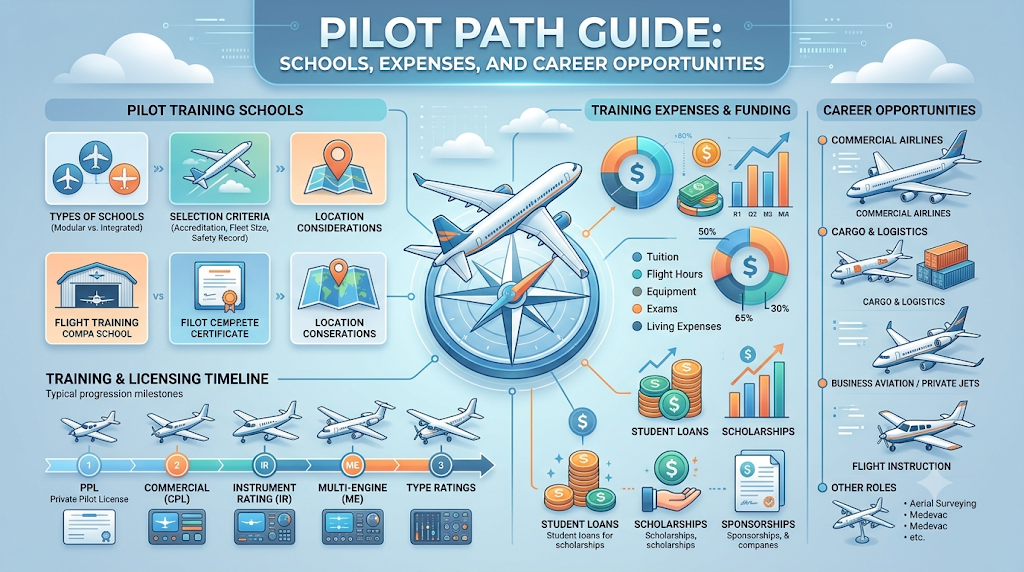
Earning an aviation license calls for proper preparation, systematic learning, and sound financial budgeting. Before taking charge of an aircraft, you need a thorough understanding of training paths, licensing rules, flight academy benchmarks, and overall expenses. This guide details the fundamental decisions and criteria every student aviator must know.bestpilotsnow.com
Steps to Earn Your Wings
Starting your flight education follows an organized process:
- Define Flying Objectives: Decide whether you intend to fly personal planes for recreation or build a long-term commercial career.
- Confirm Baseline Criteria: Review minimum age requirements, academic baselines, and English language fluency standards.
- Obtain an Aviation Medical Pass: Schedule an examination with an accredited aviation medical examiner to confirm physical eligibility.
- Check Aviation Authority Rules: Consult your local civil aviation authority to verify specific regional licensing conditions.
- Choose an Accredited Flight Academy: Evaluate training providers based on fleet size, maintenance standards, instructor availability, and overall pricing.
- Log Classroom and Flight Hours: Complete ground theory studies alongside instructor-led flight time and solo flying hours.
- Pass Written and Practical Tests: Clear mandatory written knowledge tests and pass a checkride test with an official examiner.
Choosing a Flight School: Key Factors
Selecting the right training facility impacts your safety, timeline, and overall budget. Focus on these core areas when evaluating flight academies:
- Official Authority Approval: Ensure the training center holds valid accreditation from your civil aviation authority.
- Instructor Credentials and Retention: Inquire about instructor flight hours, teaching experience, and staff retention rates.
- Aircraft Fleet and Servicing: Inspect plane availability, fleet age, and routine maintenance logs to prevent scheduling delays.
- Ground Facilities and Equipment: Look for structured study areas, briefing rooms, and flight simulators for scenario practice.
- Local Weather Conditions: Flying in regions with predictable clear weather allows for steady instruction without extended delays.
- Itemized Pricing Quotes: Request clear fee breakdowns outlining plane rentals, fuel, instructor fees, and examiner costs.
Overview of Pilot Training Courses
Flight academies structure their Pilot Training Courses around distinct skill levels and career paths:
- Recreational and Light Aircraft Track: Designed for individuals planning to fly light, sport, or small single-engine aircraft for personal leisure.
- Private License Track: The foundational course covering primary cockpit controls, cross-country navigation, and air safety.
- Commercial and Career Tracks: Advanced training focused on complex maneuvers, multi-engine aircraft, and instrument flight rules.
Private Pilot License Training
Private Pilot License Training forms the foundation of all flight education. Trainees master basic aerodynamic principles, weather analysis, air law, and emergency procedures.
Instruction balances classroom study with dual lessons under an instructor and required solo flights. Earning this license allows you to carry passengers for personal trips. However, the certification strictly forbids accepting money or financial reward for flight services.
Commercial Pilot Training
Commercial Pilot Training prepares aviators for paid roles across the aviation industry. Lessons cover complex flight maneuvers, high-altitude navigation, night operations, and emergency management.
Candidates must log higher total flight hours and pass a stricter medical check than required for private flying. Earning a commercial license permits you to perform paid flight work, though specific roles often require add-on ratings.
Airline Pilot Training
Airline Pilot Training prepares aviators for high-altitude transport operations, complex jet systems, and multi-crew cockpit management.
Many trainees join academy pathways or structured airline cadet programs. These programs include multi-engine endorsements and instrument ratings, teaching pilots to operate solely using cockpit instruments during poor weather. Airline entry requires separate technical tests, background checks, and simulator screening evaluations.
Breakdown of Pilot Training Cost
Budgeting accurately requires understanding every line item in your overall Pilot Training Cost:
- Ground School: Classroom theory, textbooks, charts, and online testing software access.
- Aircraft Hourly Rental: Hourly charges for training planes, including fuel surcharges and maintenance fees.
- Instructor Charges: Payment for ground briefings, post-flight debriefings, and dual flight instruction.
- Testing and Medical Fees: Official medical exam charges, written test fees, and examiner checkride costs.
- Flight Supplies: Aviation headsets, pilot logbooks, flight bags, sectionals, and plotters.
Most flight students require additional flight hours beyond legal minimums, so build a financial buffer into your budget.
What to Know About Type Rating Courses
Type Rating Courses provide aircraft-specific instruction required to operate heavy passenger jets or complex turboprops, such as a Boeing 737 or Airbus A320.
These intensive programs blend ground theory with extensive training inside full-flight simulators. Pilots master system automation, emergency checklists, and flight procedures for that specific airframe before receiving the type endorsement on their license.
Career Options and Pilot Jobs
Holding a commercial license opens doors to varied career paths across the aviation sector:
- Flight Instruction: Build valuable flight hours while teaching new student pilots.
- Corporate and Charter Flying: Transport business executives, private clients, or small groups on non-scheduled routes.
- Cargo Transport: Move express mail, freight, and commercial goods across domestic or international networks.
- Agricultural Flying: Perform low-altitude crop spraying, seed sowing, and aerial monitoring duties.
- Airline Operations: Fly regional, national, or international passenger routes as a commercial crew member.
Industry Criteria to Hire a Pilot
Aviation operations seeking to Hire a Pilot must follow strict verification checks to maintain safety standards:
- Establish Position Criteria: Outline specific flight hour thresholds, medical classes, and required aircraft ratings.
- Verify Credentials: Cross-check licenses, medical certificates, and type endorsements with civil aviation authorities.
- Audit Flight Logbooks: Review logged hours across dual, solo, night, instrument, and cross-country flight conditions.
- Perform Background Reviews: Contact references, verify past employment history, and review safety records.
Best Pilots Now is building a pilot directory designed to help aviation employers locate and evaluate verified pilots based on logged flight hours and ratings.
Mistakes to Avoid During Training
- Skipping School Accreditation Checks: Confirm school approvals with civil aviation authorities before paying tuition fees.
- Budgeting Strictly for Minimum Hours: Plan extra funds, as most trainees need additional practice hours.
- Delaying Medical Exams: Obtain your medical certificate before spending money on ground or flight training.
- Misinterpreting License Privileges: Remember that private pilot licenses forbid taking payment for flights.
- Ignoring Local Weather Patterns: Select flight schools located in regions with reliable year-round flying weather.
- Training Without Long-Term Goals: Choose a training path that directly supports your ultimate career destination.
- Assuming Licenses Guarantee Jobs: Focus on mastering skills, as employers evaluate applicants through practical tests.
- Overlooking Fleet-to-Student Ratios: Ensure your school maintains enough active aircraft to support its student volume.
- Skipping Contract Fine Print: Read tuition refund terms, plane cancellation rules, and extra fee clauses carefully.
- Delaying Instrument or Multi-Engine Ratings: Plan budget and schedule space for essential add-on ratings early in your training.
Comparing Training Options
Pilot Training Path Comparison
| Training Path | Main Purpose | Typical Learner | Key Considerations |
|---|---|---|---|
| Private Pilot Training | Leisure flying and personal travel | Beginners and hobbyists | Prohibits flying aircraft for pay or profit |
| Commercial Pilot Training | Paid flight operations and charter jobs | Aspiring professional aviators | Demands higher total flight hours and strict medical checks |
| Airline-Focused Training | Passenger jet crew operations | Future airline pilot candidates | Involves strict screening checks and team simulator work |
| Type Rating Courses | Flying specific heavy jet models | Licensed commercial pilots | Focuses almost entirely on advanced full-flight simulators |
Pilot Training Cost Checklist
| Expense Category | What It Covers | Questions to Ask the School |
|---|---|---|
| Flight Hours | Plane rental fees and aviation fuel charges | How many total flight hours are included in the base quote? |
| Instruction | Instructor ground and flight time | What are the hourly charges for flight and ground instruction? |
| Examinations | Written test fees and examiner checkrides | Are official examiner fees included in the package price? |
| Medical Checks | Aviation medical doctor physicals | Which class medical certificate do I need for my goal? |
| Equipment | Headsets, logbooks, and navigation charts | Are study kits and headsets provided in the tuition fee? |
| Extra Hours | Practice time needed beyond minimums | What is the exact hourly rate if I require extra practice? |
How Best Pilots Now Assists Your Search
Best Pilots Now brings flight school research, license guides, and training resources together on a single platform. The site helps aspiring aviators evaluate flight academies, review license options, and understand training expenses clearly.
In addition to educational guides, Best Pilots Now is developing a pilot directory and planned community tools to connect qualified aviators with prospective aviation employers.
Practical Training Scenarios
Scenario 1: Evaluating School Fleets
Lucas evaluates two flight schools near his city. School A quotes lower tuition but operates only two training planes. School B costs slightly more per hour but maintains ten well-serviced aircraft with on-site mechanics. Lucas selects School B to avoid long training delays caused by plane maintenance.
Scenario 2: Budgeting for Real Flight Hours
Nora plans to earn her private license. Although the legal minimum requirement is 40 hours, local flight instructors inform her that average trainees take 55 to 60 hours to finish. Nora budgets for 60 hours from the start, avoiding financial strain during her flight checks.
Scenario 3: Structuring Professional Ratings
Evan holds a private license and plans to fly charter aircraft. He reviews authority regulations and establishes a clear timeline: securing an instrument rating first, building cross-country night hours, and completing commercial ground theory. Breaking his goal into sequential steps keeps his training organized and budget-friendly.
Frequently Asked Questions
1. How to Become a Pilot?
To become a pilot, verify your basic age and language eligibility, then pass an aviation medical exam. Next, select an accredited flight school that aligns with your goals. Complete ground theory study alongside required dual and solo flight hours. Finally, pass written knowledge exams and a practical checkride test with an examiner to receive your license.
2. How do I choose the Best Flight Schools?
To choose the best flight schools, confirm official accreditation with your national civil aviation authority. Inspect fleet size, aircraft maintenance logs, and plane availability. Review instructor qualifications, facility quality, and typical local weather patterns. Always request a detailed, itemized cost estimate before enrolling.
3. What are the main Pilot Training Courses?
The main pilot training courses include private pilot license training for beginners and commercial pilot training for career seekers. Additional programs include instrument rating courses, multi-engine ratings, and airline cadet pathways. Licensed pilots can take type rating courses to fly specific commercial jet models.
4. What is Private Pilot License Training?
Private pilot license training teaches fundamental aircraft handling, navigation, flight theory, weather analysis, and emergency procedures. Students complete ground school alongside dual and solo flight hours. Earning this license allows you to fly aircraft with passengers for personal travel, though you cannot legally receive pay for flying.
5. What is the difference between private and commercial pilot training?
Private pilot training focuses on fundamental flying skills for personal travel or leisure. Commercial pilot training involves advanced maneuvers, commercial flight rules, complex aircraft systems, and significantly higher flight hour requirements. Crucially, a commercial license legally allows qualified pilots to earn income from flight work.
6. How much does Pilot Training Cost?
Pilot training cost depends on the target license level, school location, aircraft type, and total flight hours logged. Typical expenses include plane rentals, fuel, instructor fees, study materials, medical checks, and exam fees. Candidates should request detailed cost breakdowns directly from target schools.
7. What is included in Airline Pilot Training?
Airline pilot training covers advanced flight theory, multi-engine operations, instrument navigation, and crew resource management. Students practice multi-crew operations and emergency procedures inside flight simulators. Completing this training prepares candidates for technical screening tests and airline hiring evaluations.
8. What are Type Rating Courses?
Type rating courses are specialized training modules required to operate specific complex or jet aircraft models. Pilots study aircraft systems, weight limits, and flight performance through ground lessons and simulator sessions. Passing the practical test adds the specific type endorsement to a commercial license.
9. How long does it take to become a pilot?
Training completion times depend on student schedules, weather conditions, and training pathways. Earning a private license usually takes several months of consistent flying. Full commercial pilot training generally spans one to two years depending on whether you train full-time or part-time.
10. Can completing pilot training guarantee a job?
Completing flight training provides required qualifications but does not guarantee employment. Flight operators and airlines hire pilots based on total logged hours, exam results, background checks, medical fitness, and interview performance. Candidates must pass individual employer checks during recruitment.
11. What qualifications are needed for Pilot Jobs?
Pilot job requirements include a valid commercial license, appropriate medical certification, and specific aircraft ratings. Employers assess total flight hours, instrument flight experience, safety records, and background checks. Senior positions may require an airline transport license and simulator screening evaluations.
12. How can an aviation employer Hire a Pilot?
Aviation employers can hire a pilot by defining position criteria, required ratings, and minimum flight hours. Employers must verify license authenticity, medical certificates, and logbook entries. Conducting background checks, reference checks, and practical simulator tests ensures candidates meet operational safety standards.
Final thoughts
Building a successful flight career requires deliberate planning, thorough flight school research, and an accurate budget. Confirming civil aviation regulations and verifying school accreditations protects your investment and ensures steady progression toward your flight goals. Platforms like Best Pilots Now help you compare flight academies, evaluate course options, and research career pathways. Start your planning today by reviewing local civil aviation standards and contacting approved flight schools in your area.bestpilotsnow.com
Leave a Reply